
Introduction
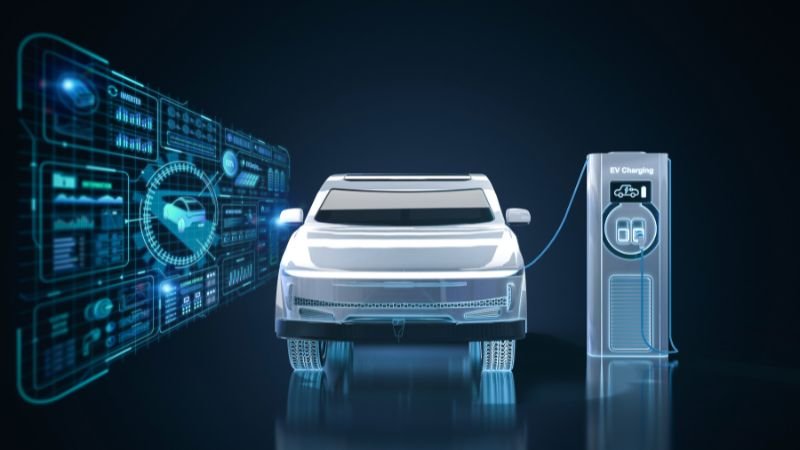
At present, the importance of electric vehicles (EVs) is rapidly increasing in the global transport sector. This transformation is taking place with the aim of reducing dependence on fossil fuels, controlling environmental pollution and enhancing energy security. Governments, industries and consumers are actively participating in this transformation.
1. Mainstream entry of EVs
The Government of India has come up with several schemes to promote EVs:
FAME II Scheme: This scheme provides subsidy on purchase of EVs.
PM E-DRIVE Scheme: This scheme has a provision of ₹10,900 crore for development of electric vehicles, charging infrastructure and battery swapping stations.
GST Exemption: GST rate on EVs and charging equipment has been reduced from 12% to 5%.
These schemes have reduced the cost of EVs and made their adoption easier for consumers.
2. Government Incentives and Policies
The Government of India has come up with several schemes to promote EVs:
FAME II Scheme: This scheme provides subsidy on purchase of EVs.
PM E-DRIVE Scheme: This scheme has a provision of ₹10,900 crore for development of electric
vehicles, charging infrastructure and battery swapping stations.
GST Exemption: GST rate on EVs and charging equipment has been reduced from 12% to 5%.
These schemes have reduced the cost of EVs and made their adoption easier for consumers.
3. Innovations in Battery Technology
The battery technology of EVs is constantly improving:
Lithium Iron Phosphate (LFP) Batteries: These batteries have a longer life and are safer.
Swappable batteries: Companies like SUN Mobility are developing swappable batteries, which
reduce charging time.
Local battery manufacturing: Companies like Reliance Industries and Ashok Leyland are setting
up battery manufacturing in India, which will reduce dependence on imports.
These innovations are reducing the cost of batteries and increasing the accessibility of EVs.
4. Impact on global oil industry
The increasing use of EVs is affecting the global oil industry:
Decrease in oil demand: According to the IEA, oil demand is decreasing due to EVs.
Strategy of oil producing countries: Oil producing countries are changing their strategies in view
of the increasing use of EVs.
Trend towards renewable energy: Oil companies are now investing in renewable energy
sources.
It is clear from this that the increasing use of EVs is changing the global energy scenario.
5. Future of EVs in India
The future of EVs in India is bright:
Job creation: 20,000 new jobs are expected to be created under the Delhi government’s EV
policy.
Charging infrastructure: The number of charging stations is being increased, increasing the
acceptance of EVs.
Investment attraction: India aims to attract $500 billion of investment in the EV sector.
From these aspects, it is clear that the future of EVs in India is in a positive direction.
6. Major types of EVs and their features
6.1 Battery Electric Vehicles (BEVs)
BEVs are vehicles that run entirely on battery power.
Examples: Tesla Model 3, Nissan Leaf, Mahindra e-Verito.
Features:
Zero tailpipe emissions.
Long charging time but low maintenance.
Dependence on charging stations.
6.2 Plug-in Hybrid Electric Vehicles (PHEVs)
PHEVs use both batteries and conventional engines.
Examples: Toyota Prius Prime, Mitsubishi Outlander PHEV.
Features:
Can run in electric-only mode for short distances.
Uses an engine for long distances.
Users get both fuel and charging options.
6.3 Hybrid Electric Vehicles (HEVs)
HEVs run primarily on engines but get power from batteries.
Examples: Toyota Prius, Honda Insight.
Features:
Combination of engine and electric motor.
Better mileage and less pollution.
No charging required, as the battery is charged by engine and regenerative braking.
7. Innovations in Battery Technology in EVs
7.1 Lithium-ion batteries
Most widely used battery technology currently.
High energy density and long life.
Example: Tesla’s lithium-ion battery.
7.2 Lithium-iron phosphate (LFP) batteries
Safer, longer life batteries.
Stable performance even at low temperatures.
More cost-effective.
7.3 Solid-State Batteries
Likely to become the dominant technology in the next decade.
Greater safety, less weight, and faster charging.
Companies like QuantumScape are researching this.
7.4 Battery recycling
Reuse of precious metals from old batteries.
In India, the government has made a policy for battery recycling.
Example: Companies like Exide and Amara Raja are setting up battery recycling units.
8. Development of Charging Infrastructure
8.1 Public Charging Stations
Rapidly growing charging stations.
Example: Charging points installed by Tata Power and EVgo.
Features:
Fast Charging (DC Fast Chargers).
Normal AC Chargers.
8.2 Home Charging Solutions
Convenience of home chargers.
Example: Tesla Wall Connector.
Benefits: Time savings, convenience.
8.3 Battery Swapping Stations
Use of battery swapping stations.
Example: SUN Mobility.
Convenience: Battery replacement in a few minutes.
9. Environmental Benefits
9.1 Clean air and less pollution
Significant reduction in air pollution due to use of EVs.
Example: Improved air quality in Delhi NCR.
9.2 Impact on climate change
Reduction in CO2 emissions from EVs.
Example: EV adoption reduces millions of tons of carbon emissions every year.
9.3 Reduction in noise pollution
Reduction in noise pollution in cities due to silent operation of EVs.
10. Economic and social impact
10.1 Employment opportunities
Creation of new jobs in the EV industry.
Example: EV charger installation technician, battery repair specialist.
10.2 New source of income
Virtual charging station operator.
EVs rental services.
10.3 Consumer savings
Lower operation and maintenance costs.
Example: Electric scooter cost vs petrol scooter.
11. Global outlook
11.1 China
World leader in EV production.
Companies like BYD, NIO are prominent on the global map.
China government subsidy model.
11.2 US
Dominance of companies like Tesla and Rivian.
Biden government’s EV infrastructure bill.
11.3 Europe
EU’s stringent pollution standard policies.
Volkswagen, BMW expand EV models.
12. Challenges and Solutions
12.1 Lack of charging infrastructure
Lack of charging stations in rural and small towns.
Solution: Partnership between government and private companies.
12.2 High initial cost
Higher purchase price of EV.
Solution: Subsidies, cheaper finance options.
12.3 Battery life and recycling
Batteries weaken over time.
Solution: Growth of battery recycling industry.
12.4 Privacy and cybersecurity
Data theft problem.
Solution: Stringent cybersecurity standards and policy.
Conclusion: Towards a green and sustainable future
Electric vehicles (EVs) are not just a technological innovation in today’s times but are emerging
as a revolutionary step towards environmental protection, economic development, and energy
security. The limitations of dependence on fossil fuels and the serious challenge of climate
change have led governments, industries, and consumers across the world to move towards
EVs. This is an era where vehicles with conventional petrol and diesel engines are gradually
losing their role and are being replaced by sustainable, eco-friendly, and smart energy-based
vehicles.
The importance of EVs is not only in environmental but also in economic terms
The use of EVs is not only helpful in reducing air pollution and greenhouse gas emissions, but it
is also bringing significant changes in the global oil scenario. In today’s time, the oil industry is
facing challenges due to the increasing influence of EVs. Global oil demand is declining, which
is also changing the strategies of oil producing countries. These countries have now decided to
reduce their dependence and increase investment in the renewable energy sector. For example,
major oil-producing governments such as Saudi Arabia are now investing heavily in solar power
and wind energy.
Also, EVs are proving to be an affordable option for consumers. Compared to rising fuel prices
and regular maintenance costs, EVs have relatively low charging costs. The impact has been
very positive in the long term. For example, electric scooters are gaining popularity in India,
which have become a low-cost and eco-friendly option.
Technological innovation: Facilitating the future
Technological innovation has been a key contributor to the success of EVs. Improvements in
battery technology have improved the efficiency and usability of EVs. The development from
traditional lithium-ion batteries to solid-state batteries has revolutionized the sector. Solid-state
batteries are particularly safe, lightweight and charge faster. In addition, battery recycling
technology has also made battery manufacturing and disposal environmentally sustainable.
The development of swappable battery systems also makes EVs more seamless and
customer-friendly. Companies like SUN Mobility are setting up battery swapping networks where
drivers can swap their batteries in just a few minutes. This also solves the problem of charging
time in long distance travel.
Expansion of charging infrastructure
The availability of charging infrastructure is a key factor in the growing adoption of EVs. The
Government of India has launched various initiatives to increase the number of charging
stations. Major industry players like Tata Power, Fortum, and ABB are setting up public and
private charging stations. Along with this, the facility of home charging points has also increased
rapidly. This makes it even more convenient for consumers to adopt and operate EVs.
Smart charging networks have made the process more user-friendly. Features like IoT-enabled
chargers, remote monitoring through mobile applications, and charging history tracking have
become part of this system. This gives consumers complete control over the charging process.
Social and economic impact
The social impact of EVs is also remarkable. Improved air quality in urban areas is improving
the health of citizens. Reduction in noise pollution has also made urban life more quiet and
comfortable.
Economically, EVs have also created new employment opportunities. New positions are being
created such as charging station installation technicians, battery recycling specialists, software
developers and electrical engineering specialists. In addition, vehicle manufacturers and
startups have also started investing in EV-related services, such as EV rental services and
battery swapping networks.
Policy making and global collaboration
The approach of governments is playing a central role in the growth of EVs. Incentive measures
such as the Government of India’s FAME II scheme and PM E-DRIVE scheme are promoting
this sector at a rapid pace. Additionally, governments are providing various tax exemptions,
subsidies and policy support.
Collaboration is also increasing at the global level. International companies are collaborating
with each other to develop standardized charging solutions for EVs. This is making the
consumer experience more seamless and interoperable.
Environmental responsibility and future direction
Environmental protection is the major motivation for EVs. Reduction in CO2 emissions is not
only preventing global warming but also reducing health problems related to air pollution. Many
countries have now pledged to completely ban fossil fuel vehicles. For example, Norway has
planned to sell vehicles only on EVs by 2025.
The goal is to build a completely clean energy-based transport system in the coming years by
connecting charging networks from renewable energy sources. Smart grids, AI-enabled energy
management systems, and renewable power infrastructure will help in this direction.
Individual and collective responsibility
Ultimately, it is not only the responsibility of the government and companies, but also of every
individual to adopt sustainable mobility. Apart from buying EVs, we also need to be aware of
their proper use, charging ethics, and battery disposal.
There should be.
Collective efforts through EV sharing programs, community charging stations, and community
awareness campaigns will make this transition more effective.