
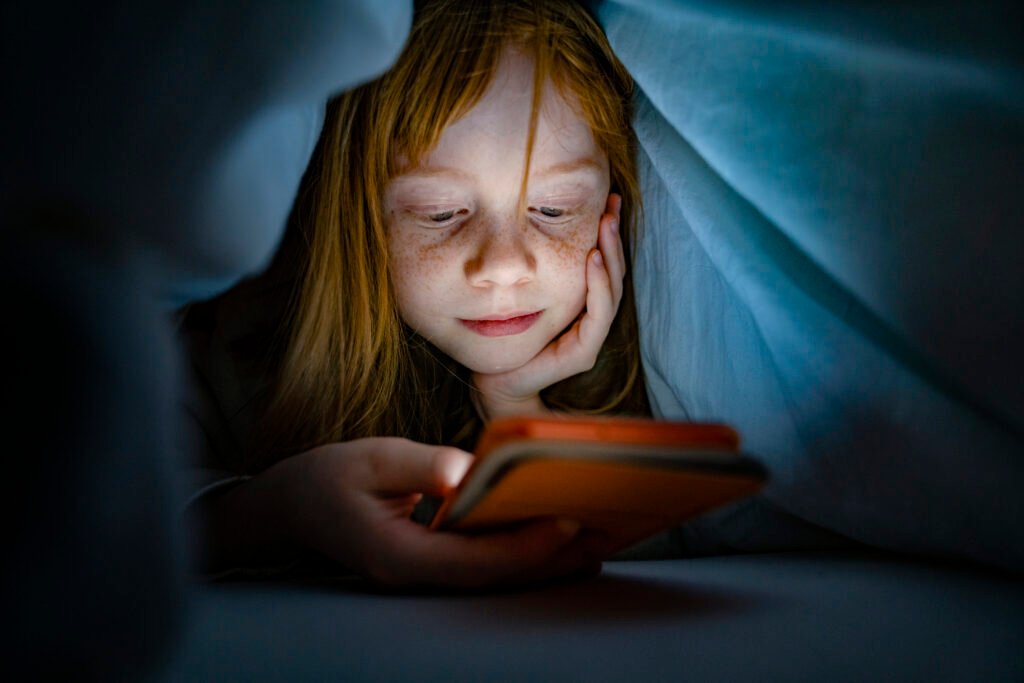
Social media has become an undeniable force in modern society, particularly for children and adolescents. Platforms like Instagram, TikTok, Snapchat, and YouTube offer unprecedented opportunities for connection, entertainment, and learning. However, this digital playground also presents potential risks to the physical and mental health of young people. This blog post aims to explore these effects in detail, providing insights for parents, educators, and healthcare professionals.
The wide reach and near ubiquitous use of social media platforms may afford novel opportunities to address these shortfalls in existing mental health care, by enhancing the quality, availability, and reach of services. Recent studies have explored patterns of social media use, impact of social media use on mental health and wellbeing, and the potential to leverage the popularity and interactive features of social media to enhance the delivery of interventions. However, there remains uncertainty regarding the risks and potential harms of social media for mental health (Orben & Przybylski, 2019),
Social media has become a prominent fixture in the lives of many individuals facing the challenges of mental illness. Social media refers broadly to web and mobile platforms that allow individuals to connect with others within a virtual network (such as Facebook, Twitter, Instagram, Snapchat, or LinkedIn), where they can share, co-create, or exchange various forms of digital content, including information, messages, photos, or videos |
One of the most significant physical health concerns associated with social media use is the promotion of sedentary lifestyles. Children and teens who spend excessive time online are less likely to engage in physical activity, leading to a range of health problems:
- Obesity: Reduced physical activity combined with increased consumption of unhealthy snacks (often marketed through social media) contributes to weight gain and obesity.
- Cardiovascular Health: Lack of exercise increases the risk of heart disease, high blood pressure, and other cardiovascular problems later in life.
- Sleep Disturbances: The blue light emitted from screens can interfere with sleep patterns, leading to insomnia, daytime fatigue, and impaired cognitive function. Furthermore, late-night social media use can exacerbate these issues.
- Musculoskeletal Issues: Prolonged sitting and poor posture while using devices can cause neck pain, back pain, and carpal tunnel syndrome.
- Eye Strain: Excessive screen time can lead to eye strain, dry eyes, and blurred vision.
The impact isn’t limited to inactivity. Studies have shown a correlation between social media exposure and risky behaviors, such as exposure to vaping or substance abuse content. The accessibility of misinformation related to health and nutrition is also a challenge. Children may attempt dangerous viral trends that cause them physical harm.
Here ,we summarized current research on the use of social media among individuals with mental illness, with consideration of the impact of social media on mental wellbeing, as well as early efforts using social media for delivery of evidence-based programs for addressing mental health problems. We searched for recent peer reviewed publications in Medline and Google Scholar using the search terms “mental health” or “mental illness” and “social media”, and searched the reference lists of recent reviews and other relevant studies.
Research has also explored the motivations for using social media as well as the perceived benefits of interacting on these platforms among individuals with mental illness. we consider three potentially unique features of interacting and connecting with others on social media that may offer benefits for individuals living with mental illness. These include: 1) Facilitate social interaction; 2) Access to a peer support network; and 3) Promote engagement and retention in services.
Recommendation: Encourage a healthy balance between screen time and physical activities. Establishing screen-free zones, particularly during mealtimes and before bed, can promote healthier habits.
As a library, NLM provides access to scientific literature. Inclusion in an NLM database does not imply endorsement of, or agreement with, the contents by NLM or the National Institutes of Health.
Learn more: PMC Disclaimer | PMC Copyright Notice
NIHPA Author Manuscripts logo
J Technol Behav Sci. Author manuscript; available in PMC: 2021 Sep 1.
Published in final edited form as: J Technol Behav Sci. 2020 Apr 20;5(3):245–257. doi: 10.1007/s41347-020-00134-x
Social Media and Mental Health: Benefits, Risks, and Opportunities for Research and Practice
John A Naslund a, Ameya Bondre b, John Torous c, Kelly A Aschbrenner d
Author information
Article notes
Copyright and License information
PMCID: PMC7785056 NIHMSID: NIHMS1586252 PMID: 33415185
The publisher’s version of this article is available at J Technol Behav Sci
Abstract
Social media platforms are popular venues for sharing personal experiences, seeking information, and offering peer-to-peer support among individuals living with mental illness. With significant shortfalls in the availability, quality, and reach of evidence-based mental health services across the United States and globally, social media platforms may afford new opportunities to bridge this gap. However, caution is warranted, as numerous studies highlight risks of social media use for mental health. In this commentary, we consider the role of social media as a potentially viable intervention platform for offering support to persons with mental disorders, promoting engagement and retention in care, and enhancing existing mental health services. Specifically, we summarize current research on the use of social media among mental health service users, and early efforts using social media for the delivery of evidence-based programs. We also review the risks, potential harms, and necessary safety precautions with using social media for mental health. To conclude, we explore opportunities using data science and machine learning, for example by leveraging social media for detecting mental disorders and developing predictive models aimed at characterizing the aetiology and progression of mental disorders. These various efforts using social media, as summarized in this commentary, hold promise for improving the lives of individuals living with mental disorders.
Keywords: mental health, social media, psychiatry, mHealth, digital health, safety
Introduction
Social media has become a prominent fixture in the lives of many individuals facing the challenges of mental illness. Social media refers broadly to web and mobile platforms that allow individuals to connect with others within a virtual network (such as Facebook, Twitter, Instagram, Snapchat, or LinkedIn), where they can share, co-create, or exchange various forms of digital content, including information, messages, photos, or videos (Ahmed, Ahmad, Ahmad, & Zakaria, 2019). Studies have reported that individuals living with a range of mental disorders, including depression, psychotic disorders, or other severe mental illnesses, use social media platforms at comparable rates as the general population, with use ranging from about 70% among middle-age and older individuals, to upwards of 97% among younger individuals (Aschbrenner, Naslund, Grinley, et al., 2018; M. L. Birnbaum, Rizvi, Correll, Kane, & Confino, 2017; Brunette et al., 2019; Naslund, Aschbrenner, & Bartels, 2016). Other exploratory studies have found that many of these individuals with mental illness appear to turn to social media to share their personal experiences, seek information about their mental health and treatment options, and give and receive support from others facing similar mental health challenges (Bucci, Schwannauer, & Berry, 2019; Naslund, Aschbrenner, Marsch, & Bartels, 2016b).
Across the United States and globally, very few people living with mental illness have access to adequate mental health services (Patel et al., 2018). The wide reach and near ubiquitous use of social media platforms may afford novel opportunities to address these shortfalls in existing mental health care, by enhancing the quality, availability, and reach of services. Recent studies have explored patterns of social media use, impact of social media use on mental health and wellbeing, and the potential to leverage the popularity and interactive features of social media to enhance the delivery of interventions. However, there remains uncertainty regarding the risks and potential harms of social media for mental health (Orben & Przybylski, 2019), and how best to weigh these concerns against potential benefits.
In this commentary, we summarized current research on the use of social media among individuals with mental illness, with consideration of the impact of social media on mental wellbeing, as well as early efforts using social media for delivery of evidence-based programs for addressing mental health problems. We searched for recent peer reviewed publications in Medline and Google Scholar using the search terms “mental health” or “mental illness” and “social media”, and searched the reference lists of recent reviews and other relevant studies. We reviewed the risks, potential harms, and necessary safety precautions with using social media for mental health. Overall, our goal was to consider the role of social media as a potentially viable intervention platform for offering support to persons with mental disorders, promoting engagement and retention in care, and enhancing existing mental health services, while balancing the need for safety. Given this broad objective, we did not perform a systematic search of the literature and we did not apply specific inclusion criteria based on study design or type of mental disorder.
Social Media Use and Mental Health
In 2020, there are an estimated 3.8 billion social media users worldwide, representing half the global population (We Are Social, 2020). Recent studies have shown that individuals with mental disorders are increasingly gaining access to and using mobile devices, such as smartphones (Firth et al., 2015; Glick, Druss, Pina, Lally, & Conde, 2016; Torous, Chan, et al., 2014; Torous, Friedman, & Keshavan, 2014). Similarly, there is mounting evidence showing high rates of social media use among individuals with mental disorders, including studies looking at engagement with these popular platforms across diverse settings and disorder types. Initial studies from 2015 found that nearly half of a sample of psychiatric patients were social media users, with greater use among younger individuals (Trefflich, Kalckreuth, Mergl, & Rummel-Kluge, 2015), while 47% of inpatients and outpatients with schizophrenia reported using social media, of which 79% reported at least once-a-week usage of social media websites (Miller, Stewart, Schrimsher, Peeples, & Buckley, 2015). Rates of social media use among psychiatric populations have increased in recent years, as reflected in a study with data from 2017 showing comparable rates of social media use (approximately 70%) among individuals with serious mental illness in treatment as compared to low-income groups from the general population (Brunette et al., 2019).
Similarly, among individuals with serious mental illness receiving community-based mental health services, a recent study found equivalent rates of social media use as the general population, even exceeding 70% of participants (Naslund, Aschbrenner, & Bartels, 2016). Comparable findings were demonstrated among middle-age and older individuals with mental illness accessing services at peer support agencies, where 72% of respondents reported using social media (Aschbrenner, Naslund, Grinley, et al., 2018). Similar results, with 68% of those with first episode psychosis using social media daily were reported in another study (Abdel-Baki, Lal, D.-Charron, Stip, & Kara, 2017).
Individuals who self-identified as having a schizophrenia spectrum disorder responded to a survey shared through the National Alliance of Mental Illness (NAMI), and reported that visiting social media sites was one of their most common activities when using digital devices, taking up roughly 2 hours each day (Gay, Torous, Joseph, Pandya, & Duckworth, 2016). For adolescents and young adults ages 12 to 21 with psychotic disorders and mood disorders, over 97% reported using social media, with average use exceeding 2.5 hours per day (M. L. Birnbaum et al., 2017). Similarly, in a sample of adolescents ages 13-18 recruited from community mental health centers, 98% reported using social media, with YouTube as the most popular platform, followed by Instagram and Snapchat (Aschbrenner et al., 2019).
Research has also explored the motivations for using social media as well as the perceived benefits of interacting on these platforms among individuals with mental illness. In the sections that follow (see Table 1 for a summary), we consider three potentially unique features of interacting and connecting with others on social media that may offer benefits for individuals living with mental illness. These include: 1) Facilitate social interaction; 2) Access to a peer support network; and 3) Promote engagement and retention in service.
Social Media Benefits
1) Facilitate social interaction • Online interactions may be easier for individuals with impaired social functioning and facing symptoms.
- Anonymity can help individuals with stigmatizing conditions connect with others.
- Young adults with mental illness commonly form online relationships
- Social media use in individuals with serious mental illness associated with greater community and civic engagement.
- Individuals with depressive symptoms prefer communicating on social media than in-person
- Online conversations do not require immediate responses or non-verbal cues (Batterham & Calear, 2017; Brusilovskiy et al., 2016; Gowen et al., 2012; Highton-Williamson et al., 2015; Indian & Grieve, 2014; Schrank et al., 2010; Spinzy et al., 2012; Torous & Keshavan, 2016)
2) Access to peer support network • Online peer support helps seek information, discuss symptoms and medication, share experiences, learn to cope and for self-disclosure.
- Individuals with mental disorders establish new relationships, feel less alone or reconnect with people.
- Various support patterns are noted in these networks.‘
3) Promote engagement and retention in services .
- Individuals with mental disorders connect with care providers and access evidence-based services
- Online peer support augments existing interventions to improve client engagement and compliance.
- Peer networks increase social connectedness and empowerment during recovery.
- Interactive peer-to-peer features of social media enhance social functioning
- Mobile apps can monitor symptoms, prevent relapses and help users set goals
- Digital peer-based interventions target fitness and weight loss in people with mental disorders
- Online networks support caregivers of those with mental disorders.
Challenges
1) Impact on symptoms • Studies show increased exposure to harm, social isolation, depressive symptoms and bullying
- Social comparison pressure and social isolation after being rejected on social media is common.
- More frequent visits and more nmnber of social media platforms has been linked with greater depressive symptoms, anxiety and suicide
- Social media replaces in-person interactions to contribute to greater loneliness and worsens existing mental symptoms (Andreassen et al., 2016; Berry et al., 2018; Best et al., 2014; Feinsteinet al., 2013; Kross et al., 2013; Lin et al., 2016; Mittal etal., 2007; Stiglic & Viner, 2019; Twenge & Campbell, 2018; Twenge et al., 2018; Vannucci et al., 2017; Woods & Scott, 2016)
2) Facing hostile interactions • Cyberbullying is associated with increased depressive and anxiety symptoms
- Greater odds of online harassment in individuals with major depressive symptoms than those with mild or no symptoms. (Hamm et al., 2015; Machmutow et al., 2012; Rideout & Fox, 2018; Ybarra, 2004)
3) Consequences for daily life • Risks pertain to privacy, confidentiality, and unintended consequences of disclosing personal health information
- Misleading information or conflicts of interest, when the platforms promote popular content
- Individuals have concerns about privacy, threats to employment, stigma and being judged, adverse impact on relationships and online hostility (Moorhead et al., 2013; Naslund & Aschbrenner, 2019; Torous & Keshavan, 2016; Ventola, 2014)
Facilitate Social Interaction
Social media platforms offer near continuous opportunities to connect and interact with others, regardless of time of day or geographic location. This on demand ease of communication may be especially important for facilitating social interaction among individuals with mental disorders experiencing difficulties interacting in face-to-face settings. For example, impaired social functioning is a common deficit in schizophrenia spectrum disorders, and social media may facilitate communication and interacting with others for these individuals (Torous & Keshavan, 2016). This was suggested in one study where participants with schizophrenia indicated that social media helped them to interact and socialize more easily (Miller et al., 2015). The mental health implications of social media use are complex and multifaceted. While social media can facilitate connection and support, it also presents several risks:
- Cyberbullying: Online harassment and bullying can have devastating effects on a child’s self-esteem, mental health, and overall well-being. Cyberbullying can take many forms, including spreading rumors, posting embarrassing photos, and sending threatening messages.
- Social Comparison and Low Self-Esteem: Social media often presents an unrealistic portrayal of others’ lives, leading to social comparison and feelings of inadequacy. Children and teens may feel pressured to conform to unrealistic beauty standards or achieve unattainable levels of success, leading to low self-esteem and body image issues.
- Anxiety and Depression: Excessive social media use has been linked to increased rates of anxiety and depression, particularly among adolescents. The constant stream of information, the pressure to maintain an online presence, and the fear of missing out (FOMO) can contribute to feelings of stress, anxiety, and isolation.
- Body Image Issues: The constant exposure to curated and often unrealistic images of bodies on social media can lead to body dissatisfaction, disordered eating, and other body image issues. This is particularly concerning for young girls, who may feel pressure to conform to unrealistic beauty standards.
- Addiction: Social media platforms are designed to be addictive, with features like endless scrolling and push notifications that keep users engaged. This can lead to compulsive social media use, which can interfere with school, work, and other important aspects of life.
However, social media can also offer benefits, such as connecting with peers, finding support communities, and accessing mental health resources. The key is mindful and balanced use.
Recommendation: During adolescence, individuals are actively exploring their identity. Social media can influence this process in both positive and negative ways. Platforms provide spaces for self-expression and exploration, allowing young people to experiment with different identities and connect with like-minded individuals. However, the pressure to conform to social norms and the fear of judgment can also hinder authentic identity development.
- Positive Influences: Social media can facilitate the discovery of interests, hobbies, and communities that align with a child’s values and aspirations. It can also provide a platform for self-expression and creativity.
- Negative Influences: The pressure to conform to social norms and the fear of judgment can lead to a distorted sense of self. Children may feel compelled to portray a certain image online, even if it doesn’t align with their true selves.
Recommendation: Encourage self-reflection and self-acceptance. Help children understand that their online identity is not necessarily a reflection of their true selves and that it’s okay to be different.
Promote media literacy and critical thinking skills. Encourage children to question the information they encounter online and to be aware of the potential for unrealistic portrayals and cyberbullying. Open communication about online experiences is crucial. | |
Parents
| Educators
|
As social media continues to evolve, it’s crucial to stay informed about its potential impact on pediatric health. Ongoing research, policy development, and technological advancements will play a key role in shaping the future of social media and its relationship with children and adolescents.
Future considerations should include:
- Developing age-appropriate content and platforms: Creating social media environments that are specifically designed for children and teens, with built-in safety features and content moderation.
- Promoting responsible platform design: Encouraging social media companies to prioritize user well-being over engagement and profit.
- Investing in mental health resources: Providing access to mental health services and support for young people who are struggling with social media-related issues.
By taking a proactive and informed approach, we can harness the power of social media for good while mitigating its potential risks to the physical and mental health of our children and adolescents.
In Summary
This post has examined the multifaceted impact of social media on the physical and mental well-being of children and adolescents. Excessive social media use contributes to sedentary lifestyles, potentially leading to obesity and cardiovascular issues. Mentally, it poses risks such as cyberbullying, low self-esteem, anxiety, and body image issues. Parents and educators play a crucial role in mitigating these risks through open communication, setting boundaries, and promoting media literacy. Ultimately, a balanced and mindful approach to social media use is essential for safeguarding the health of the pediatric population.
“Children are not things to be molded, but are people to be unfolded.” – Jess Lair, child psychiatrist.
Reference :
Published in final edited form as: J Technol Behav Sci. 2020 Apr 20;5(3):245–257. doi: 10.1007/s41347-020-00134-x.
Pmc.ncbi.nlm.nih.gov.