
Space Tourism- Are we really ready for commercial space flights
Space Tourism: Are we really ready for commercial space flights?
Introduction
The world of science and technology has given us the ability to cross boundaries that were previously considered impossible.
There was a time when space travel was the privilege of only scientists and professional astronauts.
But in today’s era, where technology has revolutionized every field, the idea of space tourism is also becoming a reality.
The aim of space tourism is to provide the experience of space travel to ordinary citizens as well.
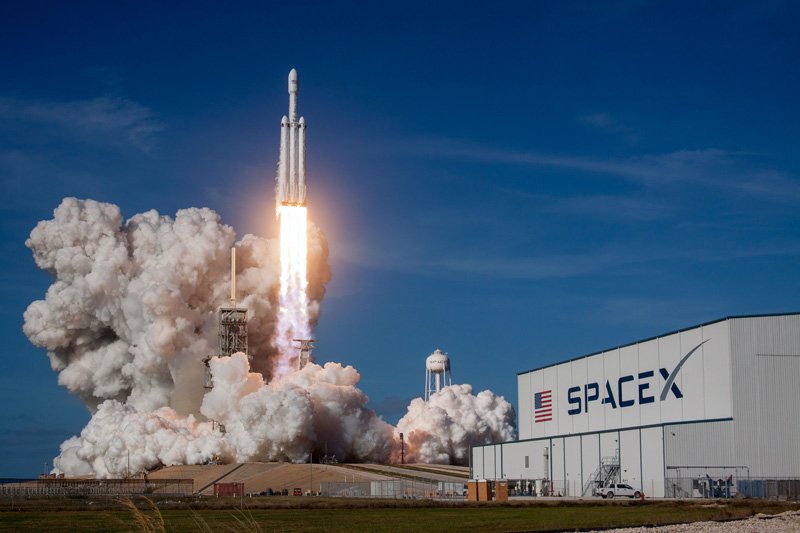
Companies like SpaceX, Blue Origin, Virgin Galactic have become pioneers in this field.
These companies have not only brought about a technological revolution but have also set new standards for commercial space flights.
In this blog, we will know in detail whether we are really ready for this new era?
Are we prepared from a technical, economic, security, and environmental point of view?
Let us discuss these aspects in detail.
History and Definition of Space Tourism
The idea of space tourism has been around since the first time humans traveled to space.
Human space travel by Yuri Gagarin in 1961 stunned the world.
Since then, space travel was limited to scientific and military purposes.
1.1 Dennis Tito’s First Civilian Trip (2001)
Dennis Tito became the first person to travel to the International Space Station (ISS) commercially.
The trip was quite expensive – about $20 million.
Since then, many other citizens have made such trips, but the activity remained limited and extremely expensive.
1.2 Today: The Rise of Space Tourism
In modern times, space tourism is no longer just for the wealthy.
Companies like SpaceX, Blue Origin, and Virgin Galactic are working towards making it more affordable, safe, and regular.
These companies have innovated in the direction of both suborbital and orbital tourism.
Major Space Tourism Companies
2.1 SpaceX
SpaceX was founded by Elon Musk.
SpaceX aims to establish human settlements on Mars, but it has also become a pioneer in the field of commercial space travel.
Rocket systems such as Starship and Falcon 9 are based on reusable technology.
Major missions
– Inspiration4 (2021): The first fully civilian crew mission to travel to space in low Earth orbit.
– Development of Starship: It is being designed for future Moon and Mars travel.
SpaceX’s strength lies in its cutting-edge reusable technology and large-scale commercial flight plans.
In the coming years, SpaceX aims to make space tourism accessible to everyone.
2.2 Blue Origin
Blue Origin was founded by Jeff Bezos.
This company focuses on the New Shepard rocket system.
It is designed for a suborbital tourism mission.
Major Mission
– New Shepard Manned Mission (2021): Jeff Bezos himself joined this mission.
– Blue Origin’s main objective is to make suborbital tourism safe and comfortable.
Blue Origin has also developed rocket technology that has minimal impact on the environment.
2.3 Virgin Galactic
Virgin Galactic was founded by Richard Branson.
Virgin Galactic targets suborbital space tourism using SpaceShipTwo technology.
Major Mission
– First successful manned flight (2021): Virgin Galactic completed a successful space flight, proving that space tourism is commercially feasible.
Virgin Galactic focuses exclusively on a comfortable suborbital tourism experience.
Cost of space travel
The high cost of space tourism is a major challenge.
Currently, a seat on Virgin Galactic costs around $450,000.
SpaceX and Blue Origin also have prices ranging from $200,000 to $55 million.
Reason for cost
Use of cutting-edge technology
Safety measures
Testing and certification process
Limited number of flights
Future prospects
In the coming years, competition, improvement in technology and entry of more companies are likely to reduce costs.
Industrialists like Elon Musk and Jeff Bezos are constantly working in this direction.
Safety concerns
Space travel is inherently risky.
The accident of Virgin Galactic’s first SpaceShipTwo vehicle raised serious questions about safety.
SpaceX, Blue Origin and Virgin Galactic have adopted strict safety protocols.
Security measures
Reusable rocket systems
Multi-factor authentication
Software security
Physical testing
Crew training programs
Despite this, making every flight completely safe remains challenging, considering the risk to human lives and the cost of billions of dollars.
Environmental impact
Space tourism also has an impact on the environment.
Rockets
The black soot and water vapor emitted by the spacecraft combine in the atmosphere and contribute to global warming.
Main impacts
Atmospheric pollution
Noise pollution
Land and water pollution
Increase in atmospheric heat
Solution directions
Development of cleaner fuels
Rocket technology that minimizes environmental impact
Imposing environmental fee on every flight
Technological challenges and innovations
Technological innovations play an important role in the success of space tourism.
Challenges
Thermal protection
Reusable rocket design
More trips at lower cost
Data privacy and cyber security
Innovations
AI-powered control systems
Blockchain-based data security
Smart contracts
Environment-friendly rocket fuels
Social impact
Space tourism is also going to have a profound impact on society.
Positive impacts
Increase in interest in science
New employment opportunities
Global connectivity
Negative impacts
Widening social inequality
Limited use to only the rich class due to very expensive service
Increasing environmental problem
Policy and law
Clear policy-making is required for space tourism.
It will be mandatory to follow rules at the international level, such as the Outer Space Treaty.
Efforts in India
– Indian government is also promoting space tourism in future
Here we are continuing the blog in detail from section 9.
Efforts and Prospects of Space Tourism in India
India has also made significant progress in the space sector.
The Indian Space Research Organization (ISRO) is playing a leading role in space research and technological development in the country.
Although ISRO’s main focus has been on scientific research and satellite launches, there are possibilities for space tourism in India in the future.
9.1 ISRO Initiatives
– Chandrayaan and Mangalyaan missions have presented India’s space research capability at the global level.
– ISRO is gradually working towards developing technology for commercial space flights.
9.2 Entry of Private Sector
Many private companies in India are also taking interest in space tourism.
Some startups are working towards providing low-cost space tourism services in the Indian market.
9.3 Policy and Regulation
The Government of India is preparing to bring the ‘Space Activities Bill’.
Through this bill, commercial space flights will be controlled and regulated.
The objective is to promote safe, responsible and sustainable space tourism.
9.4 Future prospects
India’s population and technical understanding of the youth can make it a hub of new talent in the space tourism industry.
Collaboration of ISRO and private companies towards cheap and safe spaceflight.
Space education and public awareness programs.
Ethics and social responsibilities
Space tourism is a cutting-edge technology, but it also has ethical and social responsibilities attached to it.
10.1 Social inequality
Since space tourism is expensive, this facility is limited only to the rich class.
This is further deepening the economic inequality in the society.
10.2 Environmental ethics
Companies should act responsibly keeping in mind the environmental impact of each spaceflight.
Emphasis should be laid on the development of clean fuels, energy saving and recycling technology.
10.3 User security and data privacy
Space tourism collects personal and health data of travellers.
It is imperative to store and use this data in a secure manner.
Companies must adopt a clear privacy policy.
Economic impact of space tourism
The development of the space tourism industry will have a profound impact on the global and local economy.
11.1 New employment opportunities
– Job opportunities in the scientific and engineering field.
– Spaceflight crew, technical support staff, and private tour operators.
– Space hotels, resorts and other tourism services.
11.2 Economic growth
– New markets for investors.
– Expanding India’s share in international tourism.
– Promotion of technology-based startups.
11.3 Investment challenges
– High initial cost.
– Need for collaboration between the government and private companies.
Technological advancements required for space tourism
Many technological advancements are needed to make space tourism accessible, safe and affordable.
12.1 Reusable rocket systems
– SpaceX has done the most innovation in this field.
– Reusable rocket systems like Falcon 9 and Starship make it possible to reduce costs significantly.
12.2 Development of clean fuels
– Hydrogen-oxygen engines, electric rockets, and other eco-friendly technologies.
12.3 Advanced safety systems
– Automated landing systems
– Real-time health monitoring
– Emergency protocols
12.4 Virtual reality experiences
– Providing experience to passengers through virtual reality before space travel.
– This helps in preparation and mental adaptation.
Space tourism and global competition
At present, countries like America, Russia, China, Europe and India are competing in the field of space tourism.
13.1 US
– SpaceX, Blue Origin, Virgin Galactic are the frontrunners.
– The US has the strongest technology and investments available for space tourism.
13.2 Russia
– Russia pioneered commercial space tourism through the Soyuz system.
– Still conducting missions with world-class technical strength.
13.3 China
– China has recently made rapid progress in manned space missions.
– China is also likely to play an important role in commercial space tourism in the times to come.
13.4 India
– ISRO’s capabilities and growing private space startups are making India a strong competitor in global space tourism.
Consumer Viewpoint: Are people ready?
Space travel is an adventurous experience.
Travelers consider it to be the most memorable experience of life.
14.1 Priority – Safety and Experience
– Safety comes first in user’s priority.
– Quality of experience in second place.
– Price in third place.
14.2 Awareness and enthusiasm
– Social media and media coverage have increased enthusiasm among people towards space tourism.
– Many young people are considering it as the travel of the future.
14.3 Barrier of economic class
– Only the rich class is able to use space tourism at present.
– There is a possibility of social inequality increasing due to this.
Conclusion
Space tourism is not only an achievement of science, but it has become an important part of the future of humanity.
Companies like SpaceX, Blue Origin, Virgin Galactic are revolutionizing this field.
At present, its biggest challenges are high cost, safety, environmental impact, technological development, and social equity.
This can be a golden opportunity for countries like India if pursued with the right policy, investment, and innovation.
Technological advancements, more competition, and eco-friendly innovations will make space tourism more affordable and safer in the coming years.
So, it is fair to say that we are slowly getting ready for commercial space flights, but more efforts, regulations, and innovation are needed.
Space tourism has a bright future, but its success is possible only if it develops in a balanced way from technological, economic, social, and environmental perspectives.
Broader impact of space tourism and future direction
The rise of space tourism is not just a technological achievement, but it is a revolutionary change that will have a profound impact on the global economy, society and culture.
Space Tourism in the Economic Scenario
The global economic impact of the space tourism industry is expected to reach billions of dollars in the future.
Since the beginning of space travel, this sector has been attracting the attention of investors.
Along with big companies, small startups are also entering this field.
In India too, many space startups have emerged and are working in the field of spaceflight technology, spacehotels, and providing virtual spaceflight experiences.
New employment opportunities will be created related to space tourism – space guides, technical support engineers, security experts, data analysts, and virtual experience developers.
In addition, infrastructure for spaceflight such as launchpads, control rooms, research labs, and space resorts will also be developed.
Social impact and impact on culture
Space tourism is also changing the outlook of society.
This experience, once reserved only for scientists, has now become a part of the dreams of the common citizen.
Interest in space is increasing among the youth.
Schools, colleges, and universities are prioritizing space education.
In addition, stories, documentaries, and social media posts related to space tourism are inspiring people towards new ideas, new technologies, and scientific innovation.
It promotes a spirit of innovation, adventure, and global cooperation in society.
Importance of global competition
Competition in space tourism is leading to rapid advancement in technology.
Along with the US, Russia, China, and Europe, India is also joining this competition.
Efforts are underway to make space travel safe and responsible through international cooperation.
International rules such as the Outer Space Treaty ensure that space is used for the benefit of all humanity.
Importance of technological innovation
Technological innovation will form the backbone of the sector in the times to come.
Innovations such as lighter and stronger materials for spaceflight, cleaner fuels, AI-based control systems, and virtual reality experiences will empower the industry.
New models such as blockchain-based data privacy, smart contracts, and crowdsourced space data analytics will contribute to its growth in the future.
Sensitivity towards the environment
With the expansion of space tourism, it is very important to understand environmental responsibilities.
Not only technological development, but also the pollution generated with every flight will have to be paid strict attention.
Reducing environmental impact has become imperative through sustainable technology, recycled fuels, and carbon offset programs.
Along with this, special protocols are being adopted to control space debris.
Final Thoughts:
The future of space tourism is bright, but so are the responsibilities that come with it.
It should not only be a symbol of technological advancement but also of social, economic, and environmental balance.
If we prioritize careful policy making, technological innovation, social inclusiveness, and environmental protection, space tourism will prove to be a new revolution for humanity.
In the times to come, this industry will open doors to new possibilities – tourism on the Moon, human settlements on Mars, virtual spaceflights, and space resorts.
With these innovations, space tourism will emerge as a new identity of humanity.